Twisted stitches are one of the most common knitting mistakes, especially among beginners. In fact, many knitters don't realise they're twisting their stitches until months or even years after learning to knit.
The topic has recently sparked plenty of discussion on social media after an instructor offering paid knitting lessons was criticised for unknowingly twisting her stitches throughout her demonstrations. I won't name names, because this article isn't about calling anyone out. Instead, it highlights just how easy it is to develop habits that seem perfectly normal when you've never been taught otherwise. If you learned to knit from a friend, family member, video tutorial, or even taught yourself, there's a chance you've never questioned whether your stitches are mounted and worked correctly. After all, if the fabric looks knitted and you're happy with the result, why would you?
I'm generally not someone who believes there's only one "correct" way to knit or crochet. Different styles, techniques, and methods have evolved all over the world, and many of them produce beautiful results. However, when we're talking about the basic structure of a knit (or crochet) stitch, there is a technically correct way for that stitch to sit and be worked within a given method. When that structure is changed unintentionally, the stitch becomes twisted, which alters both the appearance and the characteristics of the fabric.
It’s also worth noting that different knitting traditions can mount stitches differently on the needle. Most English-language patterns assume Western-style knitting, where the right leg of the stitch sits at the front of the needle. In other styles, often referred to as Eastern or Eastern European knitting, stitches may sit the opposite way on the needle. Neither is “wrong”, but what matters is consistency within the method you are using. For the purposes of this article, we’re focusing on Western-style knitting, since that’s what most modern tutorials and patterns refer to.
The good news is that twisted stitches are easy to identify once you know what to look for, and if you've been twisting your stitches without realising it, you're certainly not alone.
So what is a twisted stitch?
A twisted stitch occurs when the stitch is worked through the wrong leg, causing the two legs of the stitch to cross over one another. If you don't know what a stitch leg is, it's simply one of the two sides of the stitch as it sits on your needle. If you're a crocheter, you can think of them a bit like the front and back loops of a crochet stitch.
Instead of forming the open "V" shape that knit stitches are known for, a twisted stitch appears crossed at its base, almost as if the legs of the stitch are hugging each other (or trying very hard not to pee!). This creates a tighter, less flexible stitch that can affect both the appearance and gauge of your knitting.
Twisted stitches aren't inherently bad. In fact, they are often used intentionally as a decorative technique to add texture, definition, or structure to a fabric. The problem arises when every stitch is twisted unintentionally, turning what should be ordinary knit stitches into something quite different from what the pattern intended.
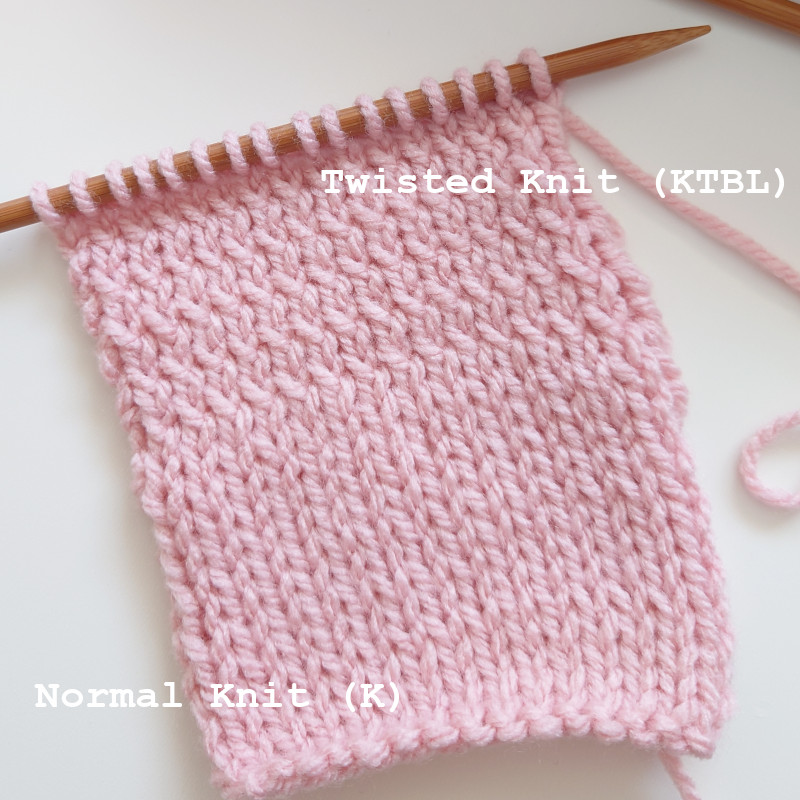
In the image above, you can see what a standard stockinette fabric should look like when worked correctly, with one row knit (K) and one row purl (P) repeated throughout. The stitches form neat, open "V" shapes that create the smooth surface stockinette is known for.
Compare that to the swatch at the top, which has been worked using one row of twisted knit stitches and one row of regular purl stitches. Although it may look similar at first glance, the twisted stitches create a tighter, more textured fabric, and the individual stitches appear crossed rather than open.
It’s also worth noting that knit stitches aren't the only stitches that can be twisted. Depending on how you wrap and work your yarn, it's possible to twist either your knit stitches or your purl stitches without realising it, which is why learning to recognise the structure of the stitch itself is so important.
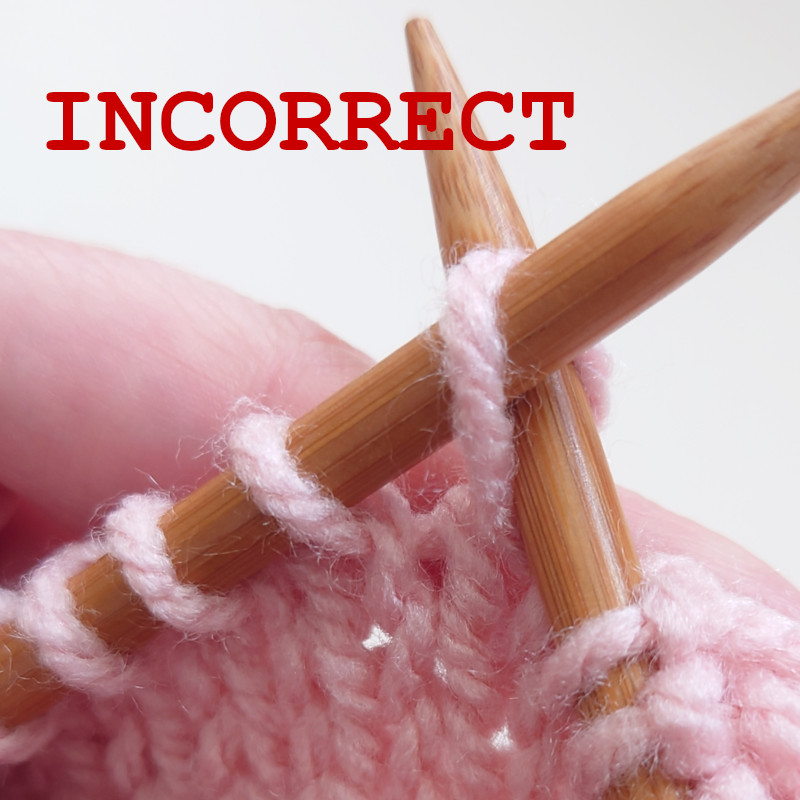
These next images show the correct way to wrap your yarn when working a Western-style mounted stitch.
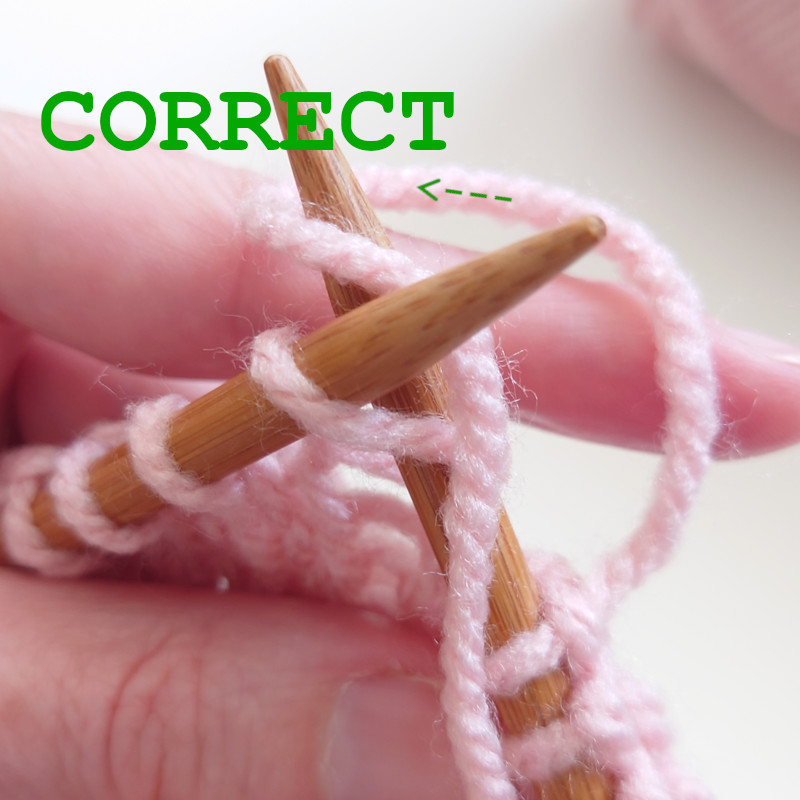
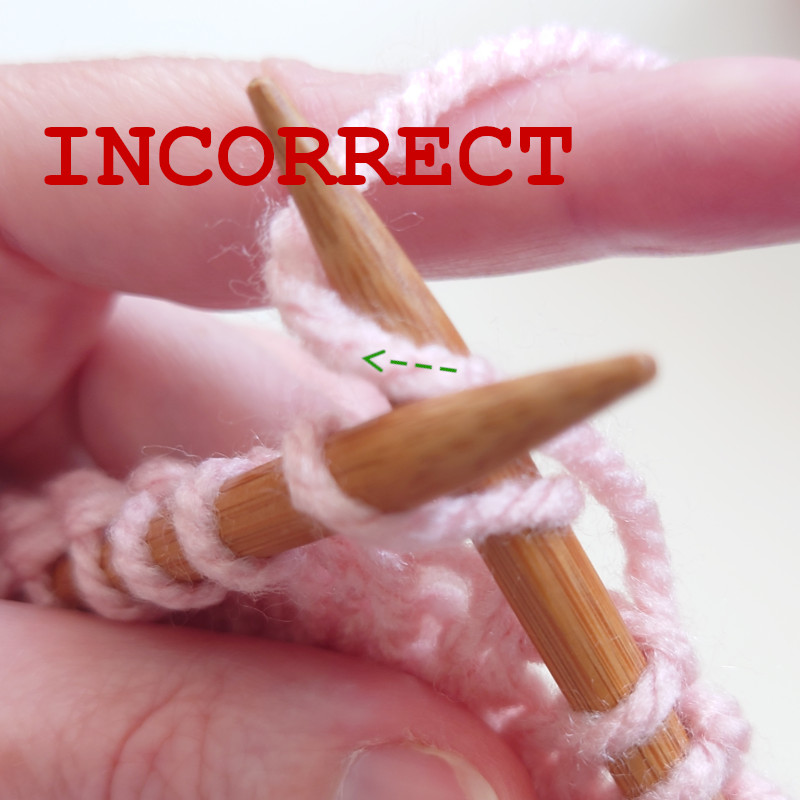
The examples above show the correct way to wrap your yarn for a knit (K) stitch and the incorrect way.
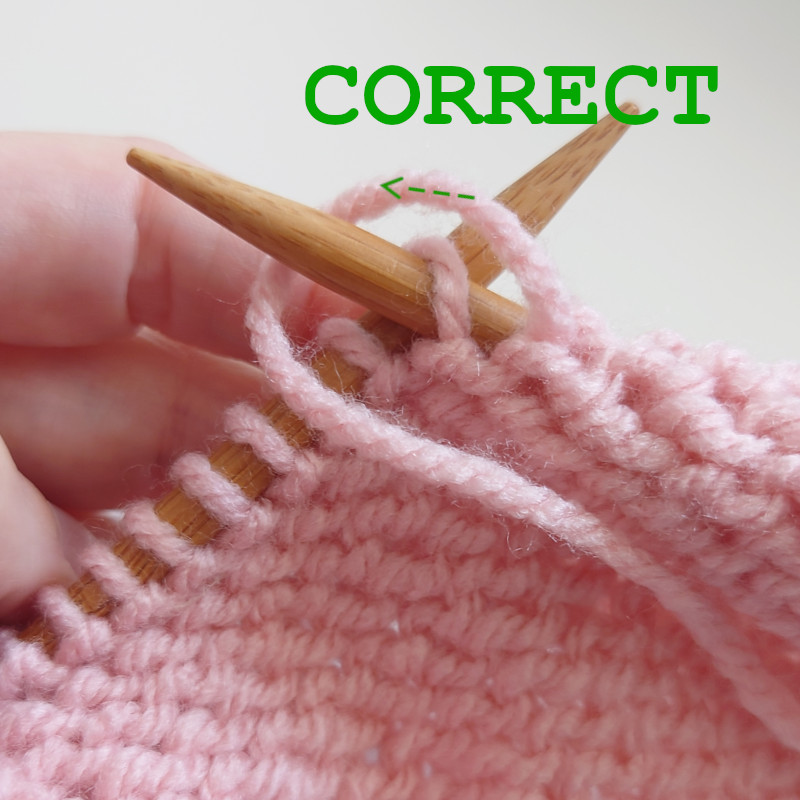
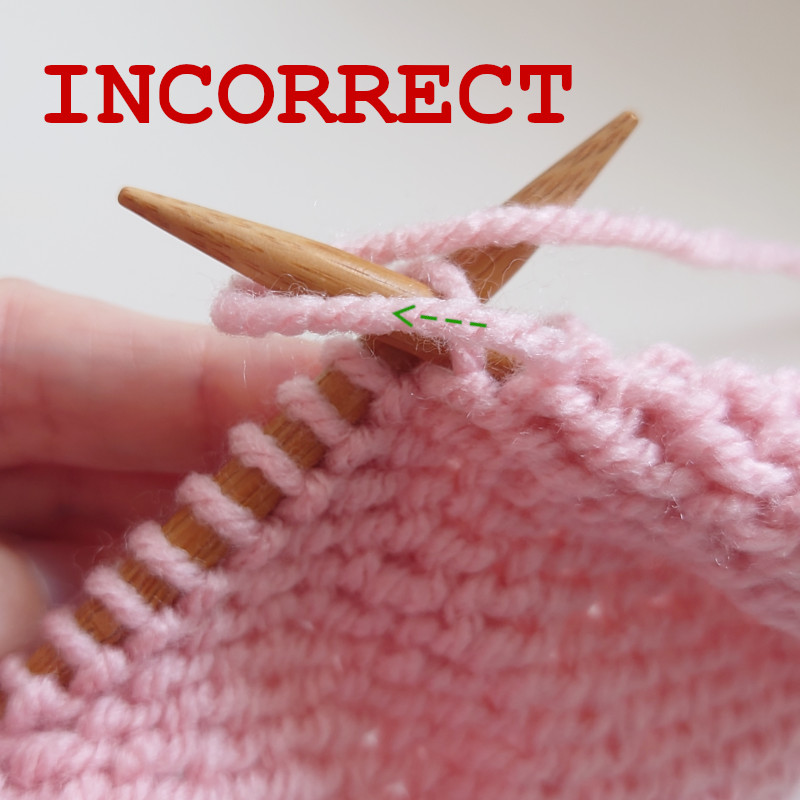
The examples above show the correct way to wrap your yarn for a purl (P) stitch and the incorrect way.
So, why does it happen?
There are several reasons why stitches become twisted accidentally.
One common cause is learning from a video, tutorial, or demonstration where the yarn is wrapped around the needle in the opposite direction. This causes the stitch to sit differently on the needle and, if it is then worked as though it were mounted normally, it becomes twisted.
Have you ever unraveled your knitting and picked up the live stitches again, only to find that they suddenly feel awkward or slightly “off” to work into? That’s often because the stitches are now mounted differently on the needle. If they are worked without noticing this change, they can easily become twisted on the next row.
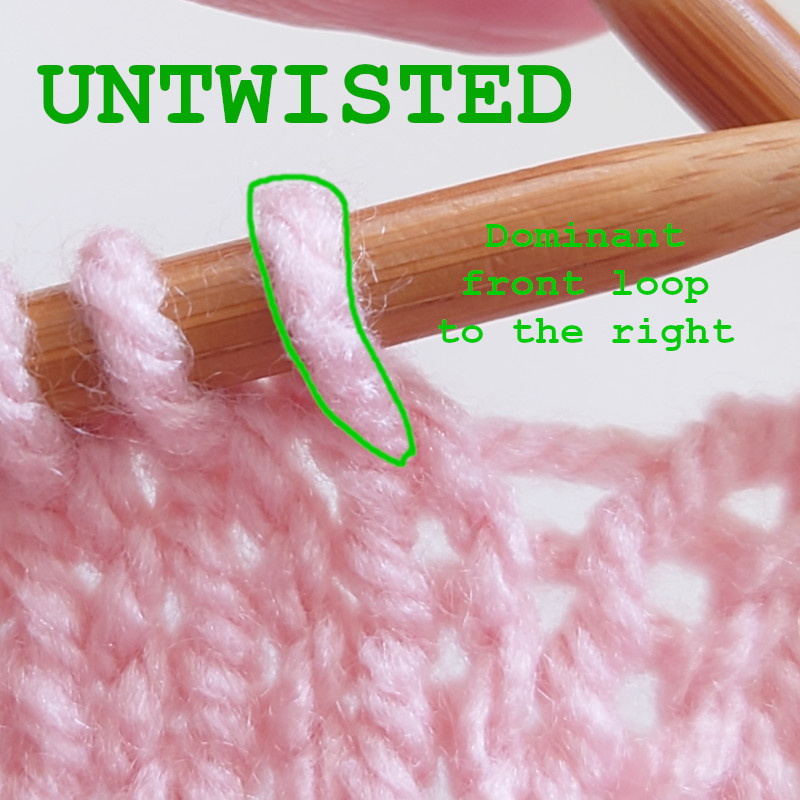
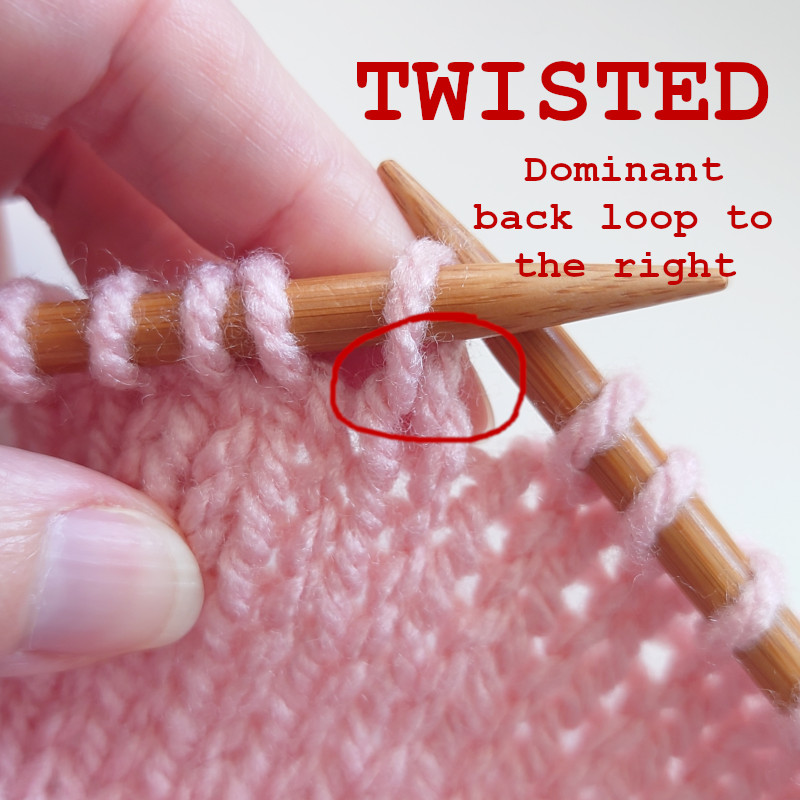
Another common cause is knitting through the back loop without realising it. Beginners sometimes insert the needle into the back leg of the stitch because it feels more natural or easier to access than the front leg. However, a standard knit stitch is worked through the front leg.
In fact, knitting through the back loop is a distinct technique with its own abbreviation: KTBL (Knit Through Back Loop). It is used intentionally in patterns to create twisted stitches for decorative effect. The issue arises when knitters accidentally work every stitch this way, treating KTBL as though it were a standard knit stitch without realising they are changing the structure of the fabric.
 So, is it a problem?
Twisted stitches aren't necessarily wrong, but they do change the characteristics of the fabric. Because the stitch is pulled tighter, the resulting fabric is often less stretchy, denser, and more defined in texture. Twisting every stitch can also affect your gauge, often producing a smaller fabric than expected. This is why a project worked entirely in twisted stitches may feel firmer and less flexible, even when the correct yarn and needle size have been used.
As I've already mentioned, many stitch patterns intentionally use twisted stitches to create decorative effects, and twisted ribbing is particularly popular because it produces crisp, tidy columns. However, if your pattern doesn't call for twisted stitches, they can affect the fit, drape, elasticity, and size of the finished project. The important thing is understanding whether you're twisting stitches intentionally or by accident.
The good news is that if you've discovered you're twisting your stitches, there's no need to panic. Plenty of knitters have learned this way and gone on to create beautiful projects. Knitting is a journey of learning, and this is simply another skill to add to your toolkit. Even after years of knitting and crocheting, I'm still learning new techniques, discovering different methods, and finding better ways to do things. That's one of the things I love most about these crafts. There's always something new to learn, and I find that incredibly exciting.
How to fix it?
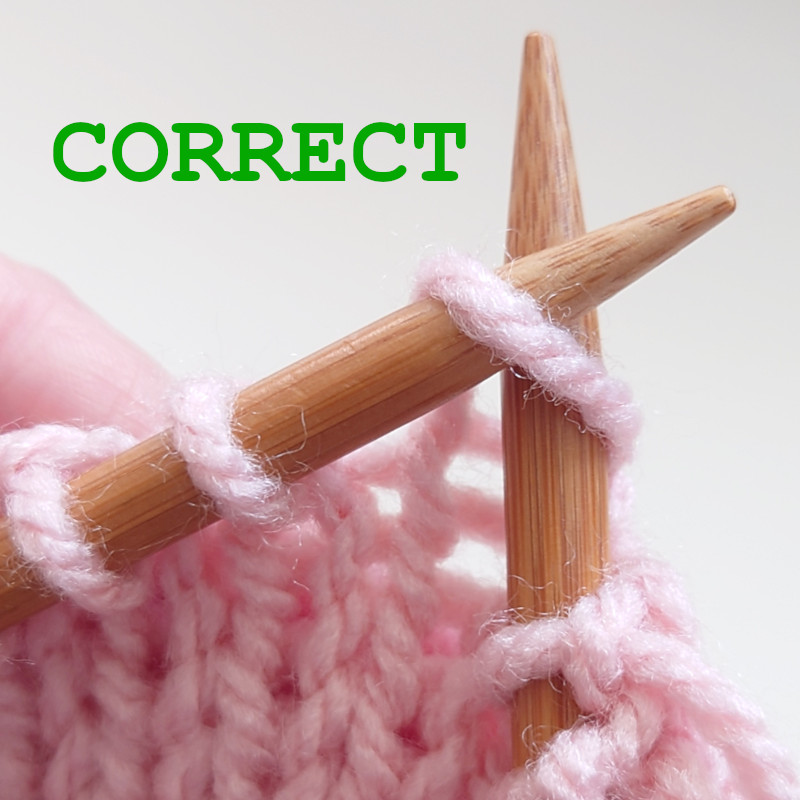
To avoid twisting your stitches, start by looking at how they sit on the needle before you knit them. In standard Western knitting, a correctly mounted stitch will have the right leg sitting at the front of the needle, closest to the needle tip you are about to work into. This creates the familiar open “V” shape when you look at the stitch. When working a regular knit stitch, insert the needle into this front leg.
If the stitch looks different and the “V” appears to lean the other way, with the opposite leg sitting at the front of the needle, the stitch is mounted differently. In this case, you can either remount the stitch so it sits correctly on the needle, or work through the leg that is at the front to avoid twisting it. This often happens after picking up dropped stitches, placing unraveled stitches back onto the needle, or when learning from tutorials that use a different knitting style.
After a few rows, your eye will quickly learn to recognise the difference, and spotting twisted stitches will become second nature.
Discovering that you've been twisting your stitches can feel frustrating, especially if you've been knitting that way for a long time, but it's an incredibly common experience and one that many knitters go through. Once you know what a twisted stitch looks like, you'll be able to spot it immediately and decide whether it's a mistake to correct or a technique to use intentionally.
However, It’s also worth noting that knitting styles can affect what you see on the needle. If you notice someone consistently knitting into what looks like the back leg of the stitch, it doesn’t necessarily mean they are doing something wrong or twisting their stitches. They may simply be knitting in an Eastern or combination style, where stitches are mounted differently on the needle. In those cases, what looks like “knitting into the back loop” in Western terms is often just the normal way they work into the stitch to produce standard, untwisted stockinette in their own method, but that's a whole other article!
I hope this article has helped.